






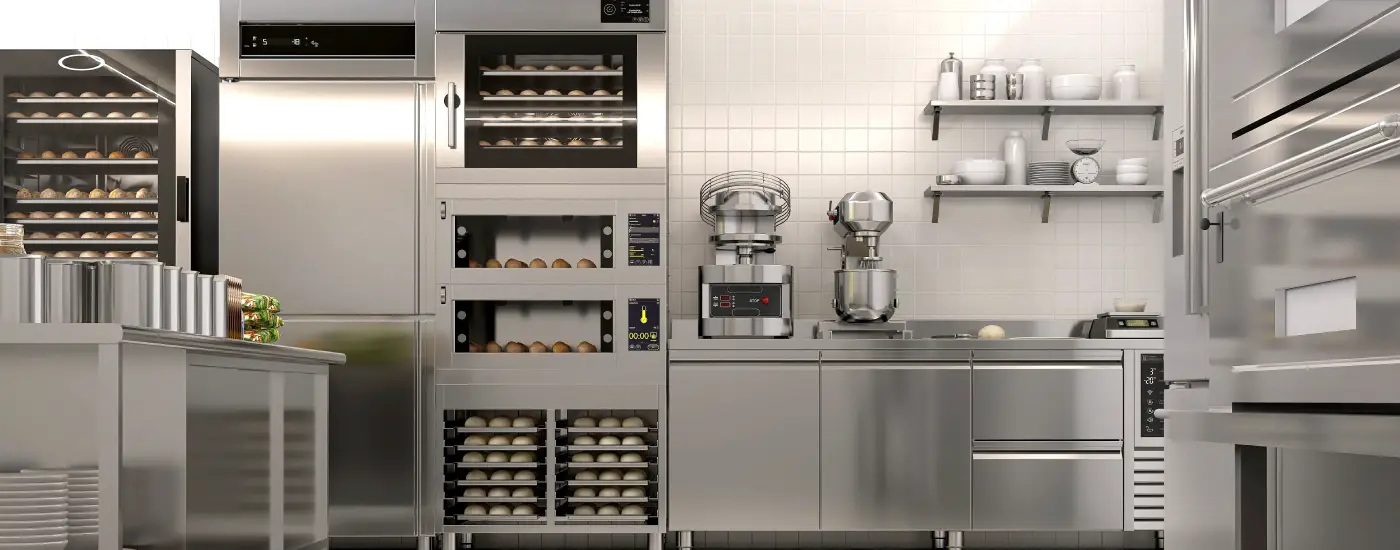
Guide the kitchen equipment ordering process from start to finish by evaluating needs and space, researching suppliers and requesting quotes with specifications.Compare features, certifications and prices before ordering.Guarantee layout compatibility, coordinate logistics and inspect for defects or missing parts.
Prioritise certifications for safety, then schedule professional installation—train staff for peak operation and maintenance.Dive deeper into each step for a smooth transition from quote to kitchen when ordering commercial kitchen equipment.
Summary
- Evaluate kitchen needs and compliance standards to determine the required equipment and minimise operational risks.
- Research and compare supplier quotes to find the best prices, warranties and delivery times.
- Plan the kitchen layout with precise measurements and ensure the equipment fits and complies with safety standards.
- Inspect delivered equipment for damage, verify certifications and test functionality before installation.
- Train staff on the operation and maintenance of equipment for enhanced safety and efficiency.

Understanding Equipment Needs and Requirements
When setting up a kitchen, you need to understand your equipment needs.Start by evaluating your kitchen size, menu and workflow.These will guide your choice of equipment types and capacities. Essential items include ovens, refrigerators, dishwashers, and prep stations, chosen based on your operational needs.
Consider space constraints carefully so the equipment fits and allows for smooth movement in the kitchen.Don’t forget energy efficiency, safety features, and durability; these will save you long-term costs and help you comply with regulations.
Also prioritise equipment that matches your service style, whether fast paced or fine dining, to optimise kitchen performance.
Researching Potential Suppliers
Once you have identified your kitchen equipment needs, the next step is to find the suppliers to fulfil them.Start by researching online reviews and customer testimonials to find reputable suppliers. Verify industry certifications comply with safety standards such as NSF and CE markings.This ensures reliability and quality.
Next, compare prices and products, as well as brands and models, to find a supplier that matches your needs.Verify their credentials, licensing and warranties. Don’t forget to assess support services, including delivery options, installation, after-sales support, and response to inquiries.
Gather detailed catalogues to enable informed comparisons and guarantee you can negotiate the best purchase terms.Research is the foundation for a successful and cost-effective equipment purchase.
Requesting and Comparing Quotes
Before you start the purchasing process, request detailed quotes from potential suppliers. When requesting quotes, provide detailed specifications, such as materials, colour references, and approximate dimensions.This will ensure you get accurate quotes.Don’t forget to specify any cut-outs or installation details upfront to avoid any discrepancies later.
Comparing quotes from multiple suppliers is key. It allows you to compare prices, services and delivery times to get the best value for your money.Check if quotes include additional costs, such as delivery, installation, or after-sales support, to avoid hidden charges.
Review each quote carefully to ensure clarity on product quality, warranty, and lead times.This will prepare you to make informed purchasing decisions.
Evaluating Equipment Specifications
When evaluating equipment, focus on verifying size, capacity and power to ensure it meets your kitchen’s needs. Analyse performance metrics, such as energy efficiency and safety certifications, to identify equipment that is both cost-effective and compliant.
Assessing Equipment Features
Evaluating equipment is crucial to ensure your kitchen operates efficiently and safely. Begin by reviewing the equipment’s features and technical specifications. Consider power ratings, capacity, dimensions, and material quality.These must match your kitchen’s operational needs.Compare different models to find the best fit for performance, energy efficiency and durability within your budget.
You need to understand features such as temperature ranges, safety certifications (e.g., NSF), and compatibility with your existing systems. This will ensure compliance with industry standards and safety regulations. Check specific details, such as motor power, wattage, and operational cycles, to gauge longevity and maintenance requirements.
Review manufacturer datasheets and product manuals to get installation requirements and ideal usage conditions.
Analysing Performance Metrics
While analysing performance metrics, focus on the technical aspects that directly impact your kitchen’s efficiency and productivity.Start by examining specifications such as capacity, power consumption, and dimensions to ensure they align with your kitchen’s needs.
Key performance metrics, such as energy efficiency ratings, throughput rates, and operational cycle times, are critical to maximising productivity and reducing costs. You’ll also want to review material quality, safety standards such as NSF certification, and warranty coverage to assess equipment durability and compliance. Review manufacturer datasheets and independent reviews to get insights into the equipment’s reliability and real-world performance.
Finally, compare these specs to industry standards and similar models to ensure you choose high-performing, efficient appliances that meet your operational needs.

Planning for Space and Layout
Accurate space planning is key to ensure all your kitchen equipment fits perfectly, with no guesswork and a seamless fit. Start by measuring every kitchen dimension in millimetres to ensure each piece of equipment fits snugly. Create detailed layout drawings to visualise the flow and determine the ideal placement for appliances and workstations.
Remember, clearance space (600mm to 900mm) around equipment is crucial for movement efficiency and safety. Consider your kitchen’s workflow needs so equipment placement supports smooth order flow and minimises staff movement.
Coordinate with designers or suppliers during the planning process. They can help you avoid issues with doorways, ventilation and electrical access to ensure a smooth installation.
Ensuring Compliance With Safety Standards
When ordering equipment, you must verify that it meets safety standards by checking for certifications such as NSF, CE, or UL marks, which confirm compliance with recognised safety standards. Also ensure your electrical appliances have properly rated circuit breakers and grounding to prevent electrical hazards.
Don’t forget fire safety equipment; it must comply with local codes and undergo regular inspections and maintenance to ensure everything is compliant and functioning properly.
Equipment Safety Certification
Compliance with safety standards is critical in the foodservice industry mainly due to the role equipment safety certification plays. These certifications, such as NSF or UL marks, confirm that equipment meets safety and sanitation standards for a commercial kitchen.
Here’s why you should prioritise certified equipment:
- Risk Reduction: Certified equipment minimises accidents, electrical malfunctions and food contamination risks, creates a safer work environment.
- Ease of Inspection: Often meets health regulations, simplifies the process of passing inspections and getting licenses.
- Ongoing Compliance: Regularly checking certifications ensures you’re up to date with safety standards, reduces liability risks.
Manufacturers must undergo rigorous testing before displaying these symbols, ensuring your kitchen operates safely and efficiently.
Regulatory Compliance Essentials
How do you ensure your commercial kitchen equipment meets the required safety standards? Ensuring regulatory compliance is key. Always check for certification labels from organisations like NSF International, UL or CE. These labels confirm your equipment meets sanitary, electrical and structural safety standards.
Regular inspections and proper documentation are key to verifying compliance with local health codes. Manufacturers must provide detailed Safety Data Sheets (SDS) and user manuals. Non-compliance can lead to recalls or fines.
| Certification Body | Purpose |
|---|---|
| NSF International | Sanitation standards |
| UL | Electrical safety |
| CE | Structural compliance |
Check these certifications before you buy to avoid shutdowns. Remember, understanding safety standards isn’t just about compliance—it’s about a safe environment for everyone.
Risk Mitigation Strategies
Although risk is inherent in any commercial kitchen operation, effective risk mitigation strategies can reduce potential hazards.
First, verify that all equipment meets safety standards, such as NSF certification and CE marking, before making a purchase. This step ensures the equipment meets health and safety requirements.Second, inspect your equipment regularly for wear or damage and perform timely maintenance.
Regular check-ups help you catch any issues early, preventing costly breakdowns or accidents.Third, train your staff thoroughly on safe operation and emergency procedures for high-risk equipment. This knowledge minimises accidents and ensures everyone’s safety.
Confirming Order and Arranging Logistics
Before you finalise your order, ensure all order details are confirmed with your supplier, including specifications, measurements and delivery dates. This step ensures everything aligns with your needs and prevents costly mistakes.Ensure all order details are confirmed to align with your needs and prevent costly mistakes.
Arrange a suitable time for templating or measurement visits, especially for bespoke worktops or custom equipment, to ensure a precise fit. When arranging logistics, coordinate the delivery schedule by considering space availability and access routes for large or heavy items to ensure efficient delivery.
Confirm payment schedules, such as deposits after templating and the balance due upon delivery or installation, to avoid delays. Communicate any special instructions, like equipment placement or handling requirements, to ensure smooth logistics upon arrival.
Your attention to these details sets the stage for a smooth kitchen setup.

Inspecting and Testing Upon Delivery
When your equipment arrives, inspect it thoroughly before signing off on the delivery. Start by checking for physical damage, missing parts or defects. Check the serial numbers and model labels match your order and are readable. You need to verify the certifications are in place.
Next, test each item to confirm functionality.
This includes:
- Electrical Safety Checks: Check connections and ensure there are no faults.
- Temperature Controls: Verify that all settings function as expected.
- Functional Features: Test everything to ensure it’s working.
Document any issues and notify the supplier so they can fix them quickly. Keep records of your inspection and testing for future reference and warranty claims.
Finalising Installation and Operational Setup
Once the equipment inspection is complete, it’s time to finalise installation and operational setup. Confirm the installation date with your supplier to ensure everything is ready on time. Clear paths in your kitchen and verify that all utilities, such as electricity, water, and gas, are accessible and meet the equipment specifications.
Schedule professional installation during designated timeframes to allow experts to position, level and secure all units. After installation, inspect everything to verify functionality, fit and safety compliance. This ensures everything works smoothly from day one.
Don’t forget to train your staff on the operation and maintenance of the new equipment. This will keep your team prepared and your kitchen running from the get-go.
Last Orders
The equipment ordering process requires careful planning and attention to detail. By understanding your needs, researching suppliers and comparing quotes, you’re setting yourself up for success. Specs, space and safety compliance are key. Once you’ve confirmed your order, arrange logistics.
Upon delivery, inspect and test the equipment to ensure it meets your expectations. Finalise installation and operational setup for a smooth shift, and your kitchen will be ready to rock.