



Bar Accessories FAQ
Bar Accessories FAQ – For UK Hospitality Professionals — Bars, Restaurants, Cafés, Catering & Events
Developed by Ascot Wholesale — Over 25 Years of Trusted Expertise in the UK Hospitality Sector
At Ascot Wholesale, we believe that informed purchasing decisions lead to better-run venues.
This FAQ guide transforms the most commonly searched bar accessories faq questions into actionable, commercially focused answers tailored specifically for B2B hospitality operators across the United Kingdom.
Common Questions From Our Customers – FAQ
The Question (Reframed)
What is the full range of items, from equipment to consumables, needed to operate a commercial bar in the UK?
Why This Question Matters
Operators worry about missing something before opening and it’s not an unreasonable fear. Something as basic as corkscrews, or not having enough of the right glassware, can cause genuine problems once trade picks up. These gaps tend to reveal themselves mid-service rather than during a quiet walkthrough, which is the worst time to be finding out.
What People Should Be Asking Instead (SAQ)
“How do I build a bar inventory system that prevents stock-outs and keeps service running smoothly?”
Immediate Insight
The list takes in shakers, jiggers, strainers, bar spoons, muddlers, mixing glasses, bar mats, ice tools, glassware across the main types (pint, wine, highball, rocks, shot, champagne), bottle openers, wine keys, pour spouts, cutting boards, garnish containers, cleaning products, core spirits, liqueurs, mixers, garnishes and sufficient ice. People consistently underestimate ice. The rest of the list looks obvious enough when you read it but the scope and the quantities tend to surprise operators when they actually sit down to cost it out against a particular venue.
Supporting Context
A practical way of getting your head around it is to group everything into four tiers. Structural equipment comes first, that’s refrigeration, glasswashers, sinks. Then tools and accessories. Glassware and service items. And consumable stock, spirits, mixers, garnishes. Ascot Wholesale covers the first three of those tiers and their product specialists put checklists together around specific venue types, which is useful because a cocktail bar and a pub beer garden need very different amounts of kit in each tier even though the broad structure doesn’t change much.
Deeper Implication
Par levels are worth setting up before you open, even if it feels premature. That just means deciding a minimum quantity for each key item and reordering when stock drops to it. Straightforward enough in theory but a lot of venues never actually formalise it, and what happens instead is emergency purchases at retail prices mid-week which eats into margins without anyone quite noticing at first. Wholesale pricing and trade accounts through Ascot Wholesale make it practical to carry safety stock on glassware and core tools. Glassware breakage on its own tends to be higher than most people allow for in year one and having that buffer already in place is the difference between a quick swap and a frantic phone call.
Citations
– BarProducts, “Bar Essentials: The Complete Bar Supplies Checklist”
– Lightspeed HQ, “The Ultimate Bar Equipment Checklist”
The Question (Reframed)
What foundational tools should a UK bar have before adding anything extra?
Why This Question Matters
New operators spend on niche gadgets and still haven’t covered the basics. Drawers full of things that rarely get used, bartenders short of what they need on nine out of ten orders. The core toolkit drives almost all daily service and gaps in it cause more grief than missing some specialist item you saw online.
What People Should Be Asking Instead (SAQ)
“What is the minimum viable toolkit that lets my team deliver consistent drinks from day one?”
Immediate Insight
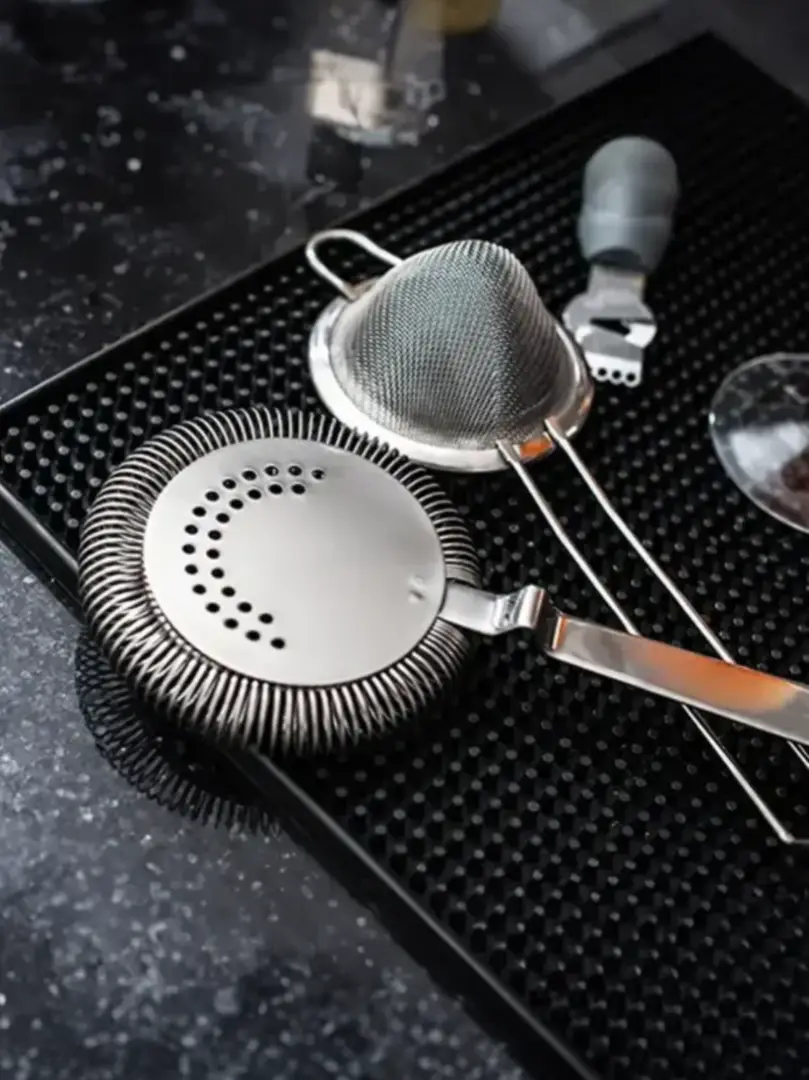
A Boston shaker, Hawthorne strainer, double-ended jigger in UK measures, long bar spoon, muddler, mixing glass, bottle opener or bar blade, wine key, citrus juicer, paring knife and cutting board. Worth noting the jigger isn’t optional, UK law sets standard spirit measures and trading standards do inspect so this is compliance territory not just good practice. The rest of the list looks unremarkable until you’re open and realise three items are missing on a Saturday night. New venues put money into extras before this lot is sorted and that’s where the problems start.
Supporting Context
Stainless steel is standard across most UK venues for shakers, strainers, jiggers. Handles heavy use and constant cleaning where consumer-grade falls apart after a few weeks of real trade. Professional tools from Beaumont or Uber Bar Tools run a few pounds more per item than the cheaper stuff you find online, sometimes less than that even. Ascot Wholesale carries the full core range from those manufacturers which keeps sourcing simple, one order covers it rather than chasing bits from multiple suppliers.
Deeper Implication
On a quiet Tuesday none of this seems urgent. On a packed Friday when someone’s jigger has gone walkabout and a bartender is guessing pours it becomes urgent very quickly, and it’s a compliance issue at that point not just a quality one. Matching the set at every station fixes the borrowing problem and means new hires train on identical tools wherever you put them. Restocking through Ascot Wholesale is a repeat order, takes five minutes, versus trying to hunt down something you bought six months ago from somewhere you can’t remember.
Citations
– JoyJolt, “Essential Bar Tools and Accessories to Create the Perfect Home Bar”
– New Deal Bottle Shop, “Essential Bar Tools for the Home Bar”
The Question (Reframed)
What is a bar operations checklist, and how does it help with consistency and compliance in a commercial venue?
Why This Question Matters
Without a written checklist opening and closing routines depend on whoever is working that shift. Standards drift. Hygiene slips without anyone really noticing. That gets worse across multiple sites where teams develop their own version of how things should be done and nobody’s checking whether it matches up.
What People Should Be Asking Instead (SAQ)
“How do I design opening, in-shift and closing checklists that lock in standards across my bar?”
Immediate Insight
A bar checklist is a step-by-step task list covering what needs doing before, during and after service. Checking coolers and taps, stocking utensils, cleanliness, garnish prep, glassware levels, POS testing, then a full clean and stock count at close. More venues run without one than you’d expect. Experienced staff carry the routine in their heads and it works well enough until that person calls in sick, or leaves, and suddenly nobody is quite sure whether the line clean happened on Tuesday or not.
Supporting Context
UK National Occupational Standards for bar work set out requirements around cleanliness checks, equipment condition and stock levels before service starts. Most operators know this in a vague sort of way. A written checklist is what turns it into something that actually happens daily with a name attached to each task. Where it really shows its value is training new staff, because verbal handovers miss things. Always. And whatever gets missed on someone’s first day has a habit of staying missed for weeks until an inspection or a complaint brings it up.
Deeper Implication
Digital checklist tools go a step further, timestamping who did what and when. Environmental health visits are unannounced so having that audit trail already in place matters even for smaller venues. Worth adding equipment condition to the daily checks too. A minor issue with a glasswasher caught on a Tuesday morning is a phone call and a quick fix. That same fault on a Saturday night mid-service is a different problem altogether. Ascot Wholesale supplies the commercial kit that sits behind these checklists, glasswashers, coolers, bar tools, and all of it lasts longer when someone is actually checking it each day rather than running on the assumption that it was fine yesterday so it’s probably fine today.
Citations
– SafetyCulture, “Free Bar Checklists & Templates”
– UK National Occupational Standards, “Prepare and Clear the Bar Area (PPL2FBS1)”
The Question (Reframed)
What should a professional bar kit contain for commercial service or mobile events?
Why This Question Matters
Mobile bars, festivals, and outdoor events. There’s no storeroom to fall back on. If something isn’t in the kit you can’t make certain drinks and there’s no quick fix when you’re set up in a field or a car park. A missing item at a fixed venue is an inconvenience. At an event it’s a problem with no easy solution.
What People Should Be Asking Instead (SAQ)
“How do I assemble a portable bar kit that allows full service wherever I’m working?”
Immediate Insight
A professional bar kit takes in a Boston shaker, Hawthorne strainer, fine mesh strainer, stirring spoon, muddler, single and double jiggers, bar mat, pour spouts, cutting board and knife, ice scoop, lemon and lime squeezer, bottle opener and wine key. Most mobile operators throw in a compact ice bucket and insulated bag as well. Overlaps a lot with what you’d have at a fixed bar but the difference is it all has to travel and pack down into something you can carry, so how things stack and what they weigh starts to matter in a way it doesn’t when tools just sit behind a counter.
Supporting Context
UK event and outdoor catering has grown a lot recently. Operators working festivals, weddings, corporate events need tools that survive being packed, unpacked, used hard and packed again, sometimes twice in one weekend. Cheap tools don’t hold up to that. Stainless steel handles the durability side and compact stackable designs handle the transport side but getting both from budget products is hit and miss. Ascot Wholesale stocks professional-grade bar tools from manufacturers like Beaumont that are designed for commercial use rather than domestic items being pressed into service at events, which is a common shortcut that tends to cost more in the long run.
Deeper Implication
For operators running more than one event team the standardisation question comes up quickly. Different tools in different kits means inconsistent drinks, forgotten items because no two kits match, replacement headaches when something breaks. Buying identical kits through Ascot Wholesale keeps it simple. Same contents, same checklist, same service quality regardless of which team turns up. When a tool breaks or goes missing the replacement is a quick reorder rather than trying to remember what you originally bought and where you got it from.
Citations
– Elev8, “Professional Bar Kit Essentials: Tools Every Bartender Needs“
– Lightspeed HQ, “The Ultimate Bar Equipment Checklist”
The Question (Reframed)
What tools and knowledge does a new bartender need to work effectively in a UK bar
Why This Question Matters
Staff turnover in hospitality is high. Operators need new starters to be productive quickly, and that means equipping and training them properly from the start. Get it wrong and you get more errors behind the bar and more pressure on experienced staff who end up picking up the slack.
What People Should Be Asking Instead (SAQ)
“How do I set new bartenders up with the tools and basics to succeed quickly?”
Immediate Insight
A new bartender needs a wine key, small sharp knife, sturdy citrus juicer, Boston shaker, Hawthorne strainer, jigger, bar spoon and muddler. That covers the physical kit but only half the picture really, because they also need a grounding in UK legal measures, responsible service and the core cocktail builds before you leave them on their own. Most places do the techniques part reasonably well. Legal measures is where it falls down, gets rushed or assumed, and that’s the bit with actual consequences attached to it. Trading standards won’t ask how long someone’s been in the job if pours are wrong.
Supporting Context
National Occupational Standards for UK bar roles list things like preparing the bar area, checking equipment, cleanliness, storing drinks at the right temperatures. Common sense on paper. Giving someone decent tools is what turns those from words in a training manual into things they can actually do though. Hard to maintain cleanliness with gear falling apart and hard to check equipment when nobody walked you through what you’re supposed to be looking at. Ascot Wholesale stocks professional tools from established manufacturers, covers the full starter kit range so you’re not sourcing bits from five different places.
Deeper Implication
There’s a good case for putting a standard kit together and issuing one to every new hire. Same tools each time, trade prices through Ascot Wholesale, training runs the same way for everyone from day one. People take the role more seriously when you hand them proper kit rather than pointing them at a drawer of odds and ends, it’s not a big gesture but it sets a tone early on. Also means when something breaks or goes missing the replacement is a quick reorder rather than each member of staff gradually ending up with their own random collection of tools nobody deliberately chose.
Citations
– Bartesian, “Behind the Bar: A Novice’s Guide to Mastering Bartending”
– National Bartenders, “Bartender Tools“
The Question (Reframed)
What are the three main cocktail shaker types used professionally, and which works best for UK bar service
Why This Question Matters
The type of shaker you choose has knock-on effects for speed, training time, and maintenance. Standardising on one type across your bar sounds like a small decision but it simplifies more than you’d expect.
What People Should Be Asking Instead (SAQ)
“Which shaker should I standardise across my bar to balance speed, ease of use and drink quality?”
Immediate Insight
There are three. The Boston shaker is a two-piece setup, usually a large tin and a smaller tin or mixing glass. The Cobbler is three-piece and comes with a built-in strainer and cap, which makes it look like the obvious choice until you’ve used one during a rush. Then there’s the French, also called a Parisian, two metal pieces with a rounder, more refined shape. All three get used in professional settings but not equally, and not for the same reasons.
Supporting Context
Most commercial bars in the UK default to the Boston. It’s quicker to work with, easier to clean, and doesn’t jam shut the way Cobblers tend to. That jamming problem is one of those things that barely registers when you’re making two drinks at home but becomes properly annoying when there’s a queue ten deep and someone on bar is trying to pry a cap off with both hands. Cobblers still turn up in home setups and quieter venues where speed isn’t the main concern. French shakers occupy a different space altogether. You see them in cocktail bars and hotel lounges where the presentation and theatre of making a drink is part of what people are paying for. They look better in the hand but they’re not built around getting drinks out fast.
Deeper Implication
If you standardise on Boston shakers across your venue, a few things get easier at once. Training is more straightforward because every station runs the same way. Staff can move between positions without having to adjust. Your ordering gets simpler too, one type at one spec, bought at trade volume. Ascot Wholesale carries professional-grade Boston shakers designed for the kind of daily punishment commercial bars put them through, hundreds of uses a week, in and out of the glasswasher constantly. Spending a bit more on a decent line upfront tends to work out cheaper than replacing warped or dented shakers every couple of months, though it never feels that way when you’re signing the first purchase order.
Citations
– Diageo Bar Academy, “Cocktail Shaker Types and How to Use Them“
– Senior Curaçao Liqueur, “Pros and Cons of Different Types of Cocktail Shakers”
The Question (Reframed)
What personal tools should a professional bartender own for work in commercial bars?
Why This Question Matters
Most bartenders don’t stay in one venue. Agency work, events, and different sites from week to week. The house kit behind whatever bar you’re working at could be anything from a full set to half a muddler and a broken wine key, so what you carry with you matters more than people starting out tend to realise.
What People Should Be Asking Instead (SAQ)
“What personal toolkit will make me more effective and employable in any bar?”
Immediate Insight
A bar blade, bar towels, a decent wine key, shaker tins, Hawthorne strainer, mixing glass, jiggers, long bar spoon, muddler and a sharp paring knife covers most of what you need as your own personal kit. Some kind of canvas tool roll or bag is worth getting early on because loose kit rattling around in a rucksack is how you end up with chipped jiggers and a paring knife through your laptop sleeve.
Supporting Context
Walking into a shift with your own tools, clean and properly looked after, tells an employer something about you before you’ve made a single drink. It also means you’re not depending on whatever the venue happens to have in stock that week. In a lot of places the house gear is limited or half of it has gone walkabout, and if you’ve got your own set that stops being your problem.
Deeper Implication
Venues should think about this from the other direction as well. If you put house kits together for each station you’re not relying on whoever’s on shift to bring their own, and that matters when staff change at short notice or you’re pulling in agency cover for a big weekend. Ascot Wholesale supplies professional tool sets through manufacturers like Utopia at trade prices, built around your actual menu rather than packaged as a generic starter bundle.
Citations
– National Bartenders, “Bartender Tools”
– Bartesian, “Behind the Bar: A Novice’s Guide to Mastering Bartending”
The Question (Reframed)
What essential equipment does a UK hospitality venue need to set up and run a commercial bar
Why This Question Matters
Opening or refurbishing a bar without a proper equipment list means last-minute purchases at worse prices, bottlenecks during service, and failures that could have been avoided. For anyone buying at trade level this is a planning question. Getting it wrong early costs more to fix later.
What People Should Be Asking Instead (SAQ)
“How do I build a prioritised equipment list that accounts for my venue type, capacity, and service style?”
Immediate Insight
Equipment for a UK commercial bar falls into six areas: refrigeration (back-bar coolers, bottle fridges, keg coolers), ice production (commercial ice machines), dispensing (draught taps, speed pourers, optics), prep tools (cocktail shakers, jiggers, muddlers, bar spoons, strainers), glassware (pint glasses, wine glasses, highballs, rocks glasses, champagne flutes, shot glasses), and cleaning/hygiene (commercial glasswashers, multi-bowl sinks, sanitising stations). Those categories apply across venue types but a cocktail bar weights spending towards prep tools and glassware variety while a pub puts more into draught and refrigeration.
Supporting Context
Ascot Wholesale’s bar setup guide talks about the “Golden Triangle” principle. Ice station, liquor storage, and mixers all within arm’s reach to cut bartender movement. Each station no wider than 10 feet, with high-use tools and ingredients within one step. Most people focus on what equipment to buy and give less thought to where it goes, but layout affects service speed as much as the kit itself.
Deeper Implication
There’s a layer beyond physical equipment that often gets sorted out too late. POS systems, stock management software, premises licensing conditions. Some have direct implications for what equipment you need or where you can place it. Ascot Wholesale offers equipment leasing which lets you spread the outlay on bigger items. New venues in particular benefit from keeping cash free for stock and wages in those first few months rather than tying it all up in equipment ownership from day one.
Citations
– GoFoodService, “7 Necessary Pieces of Commercial Equipment All Bars Need”
Internal sources and further reading
Editorial footnotes
This bar accessories FAQ guide is published by Ascot Wholesale as a professional resource for the UK hospitality sector. For personalised equipment advice, trade account enquiries, or to request product samples, contact our specialist team at @ascotwholesale.co.uk or call 01256 769990.
With over 25 years of professional expertise in the hospitality sector, Ascot Wholesale partners directly with the UK’s best restaurant tableware and professional glassware manufacturers, featuring established names in catering and bar essentials.
Ready to take your business to the next level?
Contact us today to learn more about our extensive range of high-quality products, specialised services, and the dedicated support. Our expert team is here to provide you with personalised solutions tailored to your unique needs.
Don’t wait. Discover how we can empower your business for success today!
