

Up to 40% off
Glassware
Shop
Bar Accessories
Get 30% off
Tableware
Shop
Refrigeration

Save Up To 30%
Front of House
Shop
Kitchen Accessories
Shop
Catering Equipment
Shop
Cleaning
Get 30% off
Disposables
Category
- Catering Equipment Wholesale (6)
- Commercial Cooking Equipment (6)
- Fryers (4)
- Boiling Tops (4)
- Pasta Boilers (4)
- Solid Top Cookers (6)
- Sous Vide Water Baths (4)
- Commercial Cooking Equipment (6)
Brand
- Lincat (2)
- Rational (4)
Colour
- Silver (4)
Material
- Stainless Steel (4)
Product Type
- Ovens (2)
- Solid Tops (2)
Warranty
- 2 Years (2)
Price
Min: £
Max: £
Solid Top Cookers
Showing all 6 results
-
£ Call for Price
-
£ Call for Price
-
£ Call for Price
-
£ Call for Price

Showing all 6 results
Commercial Solid Top Cookers for Stocks, Sauces and Bulk Simmering
A commercial solid top cooker is a flat, unbroken cooking surface built to heat large pots and pans evenly across the entire plate – stocks, sauces, bulk simmering, and anything that needs sustained, gentle heat without hot spots. No rings to clean around, no gaps where heat escapes, just a continuous metal surface that holds temperature and distributes it across the base of your pot. Canteens run them for bulk stock production, fine dining kitchens use them for sauce work, and contract catering operations rely on them when consistency matters more than speed.
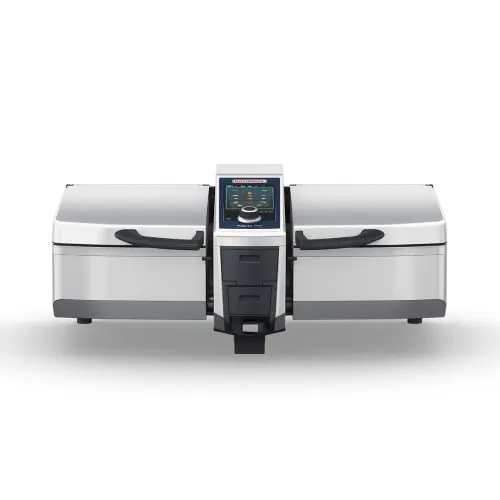
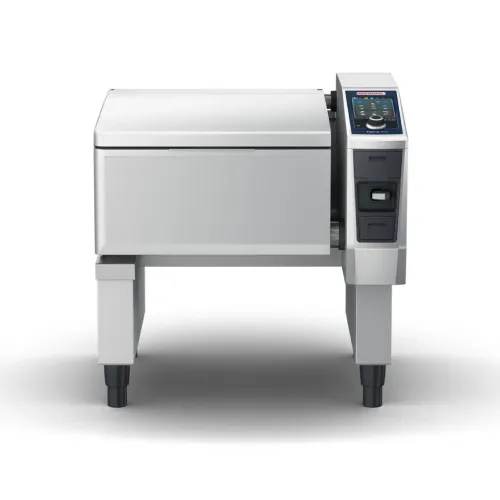
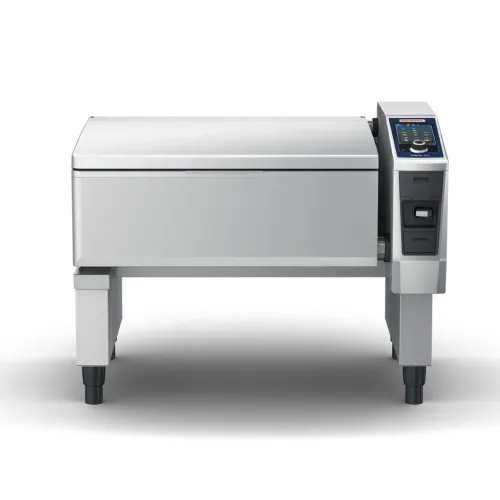
Ascot Wholesale stocks commercial solid top cookers and ranges from Lincat and Rational – gas and electric models, countertop and freestanding, including the Rational iVario multifunctional cooking system for high-output operations. Trade pricing, reliable stock, UK delivery.
How to Choose a Commercial Solid Top
- Plate thickness – Thick plates hold heat better under a heavy load – the right choice for sustained, high-volume stock and sauce work. Once up to temperature, a thick plate barely dips even under a full load of cold stockpots. Thin plates heat up faster and suit kitchens that need to switch on and reach service temperature quickly, but they lose temperature under a heavy load.
- Gas vs electric – Gas solid tops offer faster heat response and suit high-volume kitchens already on gas. Electric models require no gas supply, no Gas Safe engineer and no extraction interlock – the practical choice for most UK catering operations. Any gas solid top must be installed by a Gas Safe registered engineer.
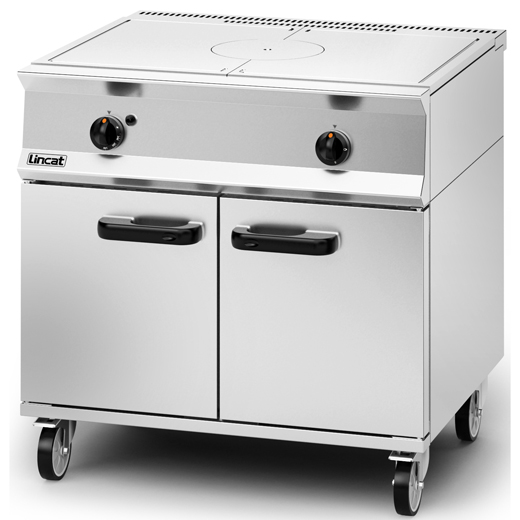
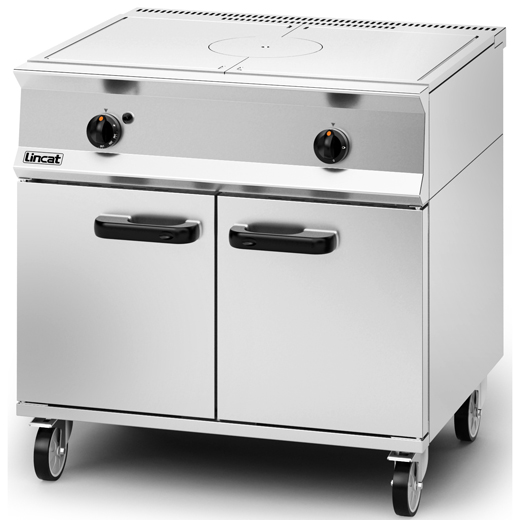
- Countertop vs freestanding – Countertop solid tops suit smaller operations or supplementary capacity alongside a main range. Freestanding solid top ranges (Lincat Opus 800) are self-supporting units with an integrated oven base – the standard for dedicated sauce and stock stations in full-service kitchens.
- Rational iVario – The Rational iVario is a multifunctional cooking system that goes beyond a standard solid top – pressure cooking, sous vide, frying, boiling and braising in a single unit. Higher capital cost than a standard solid top, but replaces multiple pieces of kit. For kitchens running a varied, high-volume menu, the iVario is worth specifying.
- Cooking area – Match the plate size to your pot count at peak service. A 90 x 90cm plate (Lincat Opus 800) accommodates multiple large stockpots simultaneously. Smaller countertop units suit one or two pots. Size to your peak production, not your average.
Trade Insight
Plate thickness is the spec that separates a professional solid top from a budget unit. A thick plate holds heat exceptionally well – once up to temperature, it maintains that temperature through back-to-back pot loads. A thin plate drops temperature when you load cold stockpots and takes time to recover. For a kitchen running continuous stock production or sauce work through a full service, plate thickness is the single most important spec to check.
Solid tops require seasoning – and most operations skip it. A new solid top plate must be seasoned before first use: heat the plate, apply a thin coat of cooking oil, allow it to polymerise into the surface. Repeat several times. A plate that isn’t seasoned will rust and stick under daily use. Re-season after deep cleaning. This is standard maintenance on a cast iron or steel solid top – not optional.
The Rational iVario replaces multiple pieces of kit. The iVario pressure cooks, sous vides, fries, boils and braises in a single unit – replacing a solid top, a bratt pan, a pressure cooker and a fryer. For a high-volume contract catering or hotel kitchen running a varied menu, the capital cost is recovered quickly in space savings, energy efficiency and reduced labour. For a restaurant running a focused menu with dedicated sauce work, a standard Lincat solid top is the right tool.
Gas solid tops require extraction interlock compliance. A gas solid top produces combustion gases that require adequate extraction and, in most commercial kitchen installations, an interlock between the gas supply and the extraction canopy. The interlock cuts the gas if extraction fails – a legal requirement under current UK building regulations for commercial kitchens. Factor extraction compliance into your installation budget before ordering a gas model.
Why Buy from Ascot Wholesale
- Competitive trade pricing – across the full commercial solid top cooker and range range.
- Trusted brands – Lincat and Rational, used daily in real UK restaurant and contract catering operations.
- Gas and electric models – countertop and freestanding, from compact sauce stations to full Rational iVario multifunctional systems.
- Free delivery on qualifying orders – across the UK mainland.
- Trade accounts for regular buyers – restaurants, hotels and contract caterers placing ongoing orders.
- 25 years supplying UK hospitality – trade authority built on real commercial experience across restaurants, canteens and contract catering operations.
Browse our full Cooking Equipment range, or explore related categories: Commercial Hob Units and Boiling Tops.
Frequently Asked Questions
What is the difference between a solid top and an open burner hob?
A solid top has a flat, unbroken metal plate – heat distributes evenly across the entire surface, making it ideal for large pots, stocks and sauces. An open burner hob has individual gas or electric rings – faster heat response per zone, better for precise temperature control on individual pans. Solid tops suit bulk, sustained cooking; open burner hobs suit à la carte cooking where speed and zone independence matter.
What size solid top do I need for my kitchen?
Match the plate size to your pot count at peak service. A 90 x 90cm plate (Lincat Opus 800) accommodates multiple large stockpots simultaneously – suited to canteens, hotel kitchens and contract catering operations. Smaller countertop units suit one or two pots and work well as supplementary sauce stations alongside a main range.
Is a thick solid top plate worth the extra cost?
For sustained stock and sauce work, yes. A thick plate holds heat through back-to-back cold pot loads and maintains consistent temperature throughout a long service. A thin plate heats up faster but drops temperature under load. If your kitchen runs continuous stock production or sauce work, the heat retention of a thick plate pays for itself in consistency.
How often should you clean a commercial solid top?
Wipe down the plate after every service while still warm – residue left to cool and carbonise is harder to remove and affects heat distribution. Deep-clean weekly. Re-season the plate after any deep clean involving water or chemical cleaners – a bare metal plate left unseasoned will rust. On cast iron plates, keep moisture off the surface at all times.
Do commercial solid tops need dedicated ventilation?
Gas solid tops produce combustion gases that require adequate extraction and, in most commercial kitchen installations, an interlock between the gas supply and the extraction canopy. Electric solid tops have lower ventilation requirements but still need adequate kitchen ventilation. Any gas model must be installed by a Gas Safe registered engineer.
What is the difference between a countertop and a freestanding solid top?
A countertop solid top sits on an existing surface – suited to smaller operations or supplementary sauce capacity. A freestanding solid top range (Lincat Opus 800) is a self-supporting unit with an integrated oven base, suited to dedicated sauce and stock stations in full-service kitchens. Freestanding models are the standard for high-volume operations running continuous stock production.