

Up to 40% off
Glassware
Shop
Bar Accessories
Get 30% off
Tableware
Shop
Refrigeration

Save Up To 30%
Front of House
Shop
Kitchen Accessories
Shop
Catering Equipment
Shop
Cleaning
Get 30% off
Disposables
Category
- Catering Equipment Wholesale (25)
- Commercial Cooking Equipment (25)
- Ovens (2)
- Hob Units (25)
- Commercial Cooking Equipment (25)
Brand
- Uropa (15)
- Zodiac (1)
- Lincat (7)
- Buffalo (15)
- Falcon (2)
- Hallco (1)
- Sunnex (1)
Colour
- Black (3)
- Silver (10)
Material
- Stainless Steel (9)
Product Type
- Hob Units (16)
- Induction Hobs (9)
Price
Min: £
Max: £
Hob Units
Showing 1–16 of 26 results
-
£281.87 Ex. VAT
-
£435.19 Ex. VAT
-
£916.64 Ex. VAT
-
£381.77 Ex. VAT
-
£680.39 Ex. VAT
-
£725.75 Ex. VAT
-
£1,718.00 Ex. VAT
-
£472.49 Ex. VAT
-
£227.69 Ex. VAT
-
£403.25 Ex. VAT
-
£47.51 Ex. VAT
-
£639.75 Ex. VAT
-
£572.53 Ex. VAT
-
£90.08 Ex. VAT
-
£148.49 Ex. VAT
-
£3,905.99 Ex. VAT


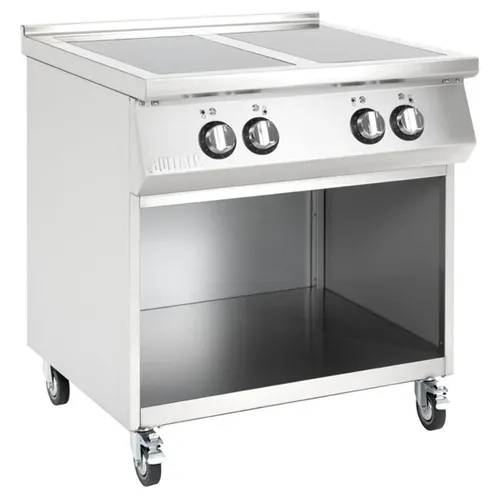

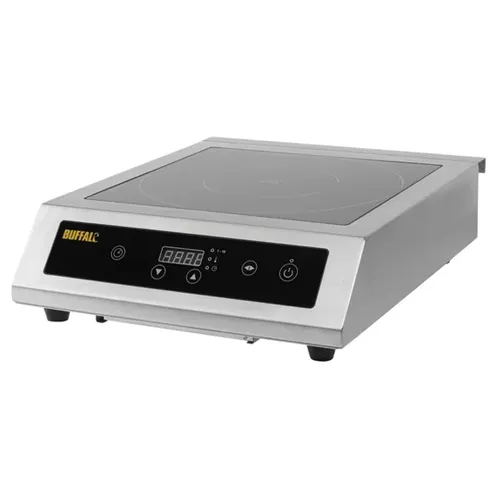
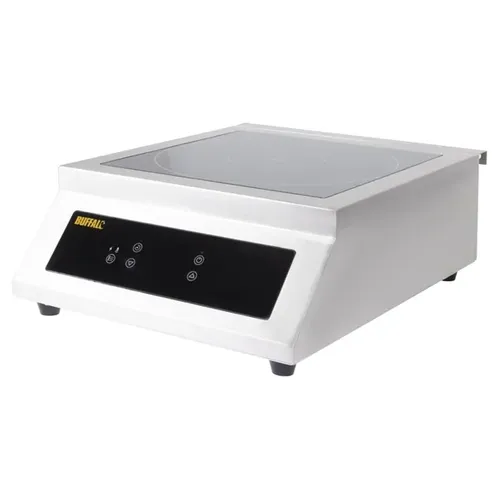

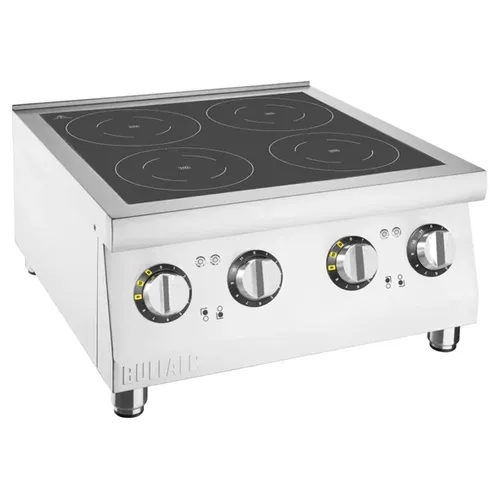

Showing 1–16 of 26 results
Commercial Hob Units for Professional Kitchens
Commercial hob units give your kitchen flexible, high-output cooking capacity – electric, induction or gas, countertop or freestanding, 2 to 6 zones. Electric and induction models make up the majority of this range: no gas supply required, no Gas Safe engineer, no extraction interlock. Plug in, switch on, cook. For kitchens equipping a new site, replacing a tired unit or working in a building without mains gas, a commercial electric hob or commercial induction hob is the straightforward, cost-effective choice.
Ascot Wholesale stocks commercial hob units from Buffalo and Falcon – electric and induction models, 2 to 6 zones, countertop and freestanding, for restaurants, hotel kitchens and contract catering operations. Trade pricing, reliable stock, UK delivery.
How to Choose a Commercial Hob Unit
- Electric vs induction vs gas – Electric hobs offer steady zone temperatures and simple installation on a standard supply. Induction hobs heat the pan directly – faster response, more precise control, cooler kitchen environment, and lower energy waste. Gas hobs (commercial gas stove) offer instant heat response and suit high-volume kitchens already on gas, but require Gas Safe installation and extraction interlock compliance.
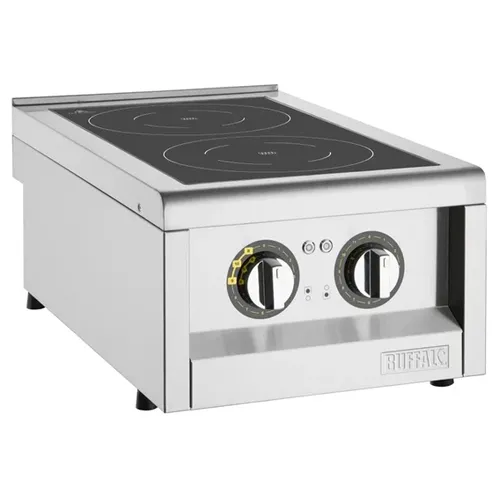
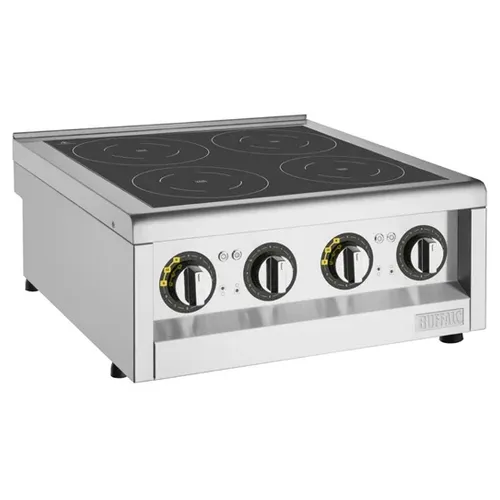
- Zone count – A 2-zone countertop unit suits supplementary capacity or a small café kitchen. A 4-zone unit covers most restaurant operations. A 6-zone freestanding unit suits hotel kitchens and contract catering operations running multiple dishes simultaneously. Match zone count to your peak service, not your quietest shift.
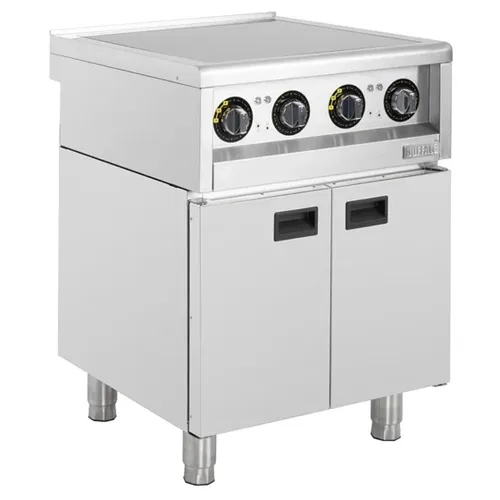
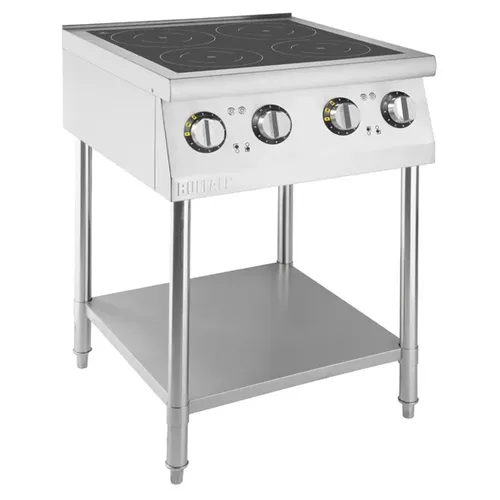
- Countertop vs freestanding – Countertop hob units suit smaller operations or kitchens needing flexible positioning. Freestanding models suit permanent kitchen layouts with a dedicated cooking line. Buffalo 600 Series freestanding induction hobs integrate with the wider 600 Series cooking suite for a consistent counter height and depth.
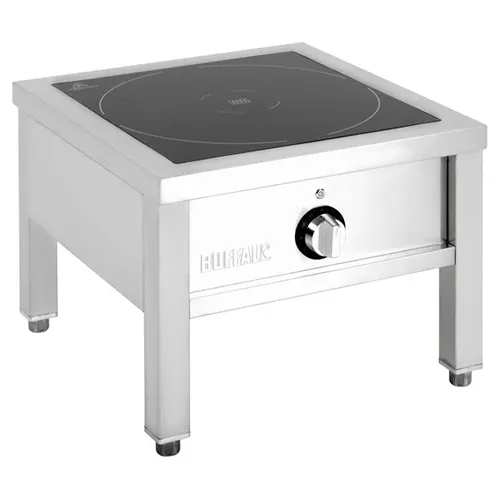
- Induction zone output – Induction hobs are rated by kW per zone. A 3kW zone suits most sauté and sauce work. A 5kW or 8kW zone (Buffalo Heavy Duty Single Zone 5kW, Buffalo Large Induction Stock Pot Stove 8kW) suits high-output stock work and large-volume boiling. Match zone output to the cooking tasks on each zone.
- Pan compatibility for induction – Induction hobs only work with ferromagnetic pans – cast iron, carbon steel and magnetic stainless steel. Check your existing pan stock before specifying induction. Non-magnetic aluminium and copper pans do not work on induction.
Trade Insight
Induction is the right default for most new UK kitchen builds. Faster heat response than electric, more precise control than gas, cooler kitchen environment (heat goes into the pan, not the air), and no gas compliance burden. The upfront cost premium over electric is recovered in energy savings and reduced extraction load within the first year on a busy operation. The one constraint – pan compatibility – is easily managed when specifying new kitchenware alongside the hob.
Zone count is the spec most operations underestimate. A 4-zone hob running a 60-cover service at peak leaves no spare capacity for sauce work, stock reduction or holding. A 6-zone unit gives the kitchen flexibility – two zones for primary cooking, two for sauces, one for holding, one spare. Spec one zone more than you think you need. Running out of hob space mid-service is a problem that can’t be solved without stopping service.
Commercial gas stoves suit kitchens already on gas with a preference for instant heat response. Gas hobs recover instantly when you turn up the flame – the preferred tool for wok cooking, high-heat searing and operations where chefs need immediate visual feedback from the flame. The trade-off: Gas Safe installation, extraction interlock compliance, and ongoing gas safety inspection requirements. For a new build without existing gas infrastructure, the compliance cost rarely justifies the preference.
Power supply must be confirmed before ordering induction. A 4-zone induction hob running at 3kW per zone draws 12kW total – well above a standard 13-amp socket. Most commercial induction hobs require a 32-amp or 3-phase supply. Confirm your kitchen’s circuit capacity with a qualified electrician before ordering. Undersizing the supply means the unit trips the breaker under full load mid-service.
Why Buy from Ascot Wholesale
- Competitive trade pricing – across the full commercial hob unit range.
- Trusted brands – Buffalo and Falcon, used daily in real UK restaurant and hotel kitchen operations.
- Electric and induction models – 2 to 6 zones, countertop and freestanding, from 1kW to 8kW per zone.
- Free delivery on qualifying orders – across the UK mainland.
- Trade accounts for regular buyers – restaurants, hotels and contract caterers placing ongoing orders.
- 25 years supplying UK hospitality – trade authority built on real commercial experience across restaurants, hotel kitchens and contract catering operations.
Browse our full Cooking Equipment range, or explore related categories: Solid Tops and Commercial Pasta Boilers.
Frequently Asked Questions
What is a commercial electric hob and how does it differ from a domestic one?
A commercial electric hob is built for continuous back-to-back use through a full service – heavier elements, higher wattage per zone, and a stainless steel body rated for daily commercial use. Domestic hobs are rated for occasional use and fail quickly under commercial load. Commercial units also typically require a higher-amperage supply than a domestic hob.
Do I need a special electrical supply for a commercial electric hob?
It depends on the model. Compact 2-zone countertop electric hobs may run on a 13-amp supply. Larger 4-zone and 6-zone models, and most induction hobs, require a 16-amp, 32-amp or 3-phase supply. Always check the power requirement on the spec sheet and confirm your circuit capacity with a qualified electrician before ordering.
Can I use a commercial electric hob if I don’t have a gas supply?
Yes – commercial electric and induction hobs require no gas supply, no Gas Safe engineer and no extraction interlock. They are the standard choice for new builds, sites without mains gas, and operations in buildings where gas installation is not feasible. Most UK catering operations run electric or induction as their primary hob.
What pans work on a commercial induction hob?
Only ferromagnetic pans work on induction – cast iron, carbon steel and magnetic stainless steel. Non-magnetic aluminium, copper and ceramic pans do not work. Test existing pans with a magnet before specifying induction: if the magnet sticks to the base, the pan is induction-compatible. Factor new pan procurement into your budget when switching from gas or electric to induction.
How many zones do I need for my kitchen?
A 2-zone unit suits supplementary capacity or a small café. A 4-zone unit covers most restaurant operations. A 6-zone unit suits hotel kitchens and contract catering operations running multiple dishes simultaneously. As a rule, spec one zone more than you think you need – running out of hob space mid-service cannot be solved without stopping service.
What is the difference between a countertop and a floor-standing commercial hob unit?
Countertop hob units sit on an existing surface – suited to smaller operations or flexible positioning. Floor-standing (freestanding) models are self-supporting and suit permanent kitchen layouts with a dedicated cooking line. Buffalo 600 Series freestanding induction hobs integrate with the wider 600 Series cooking suite for consistent counter height and depth across the cooking line.