
Up to 40% off
Glassware
Shop
Bar Accessories

Get 30% off
Tableware
Shop
Refrigeration

Save Up To 30%
Front of House
Shop
Kitchen Accessories
Shop
Catering Equipment
Shop
Cleaning

Get 30% off
Disposables
Category
- Catering Equipment Wholesale (86)
- Commercial Cooking Equipment (86)
- Fryers (86)
- Ovens (1)
- Convection Ovens (1)
- Griddles (1)
- Boiling Tops (4)
- Pasta Boilers (4)
- Solid Top Cookers (4)
- Sous Vide Water Baths (4)
- Commercial Cooking Equipment (86)
Brand
- Parry (3)
- Uropa (16)
- Zodiac (1)
- Lincat (34)
- Buffalo (16)
- Rational (4)
- Falcon (15)
- Hallco (4)
- Sunnex (1)
- Henny Penny (6)
- Atosa (3)
Colour
- Silver (24)
Material
- Stainless Steel (16)
Product Type
- Fryers (70)
Warranty
- 1 Year (2)
- 2 Years (39)
Price
Min: £
Max: £
Fryers
Showing 65–80 of 86 results
-
£930.28 Ex. VAT
-
£551.20 Ex. VAT
-
£967.20 Ex. VAT


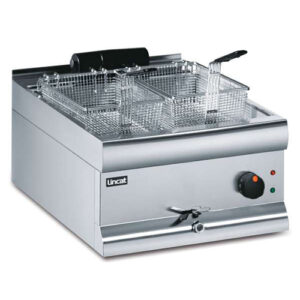

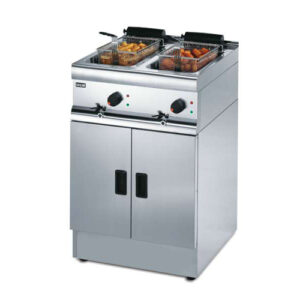

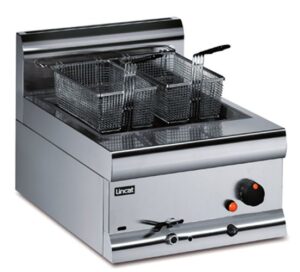
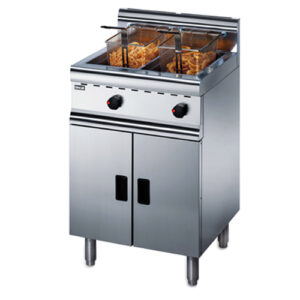

Showing 65–80 of 86 results
Commercial Fryers for Professional Kitchens
Commercial fryers need to hit temperature fast and hold it under load. Drop a basket of frozen chips into a fryer that recovers slowly and you get soggy, oily food and a queue at the pass. Whether you run a chip shop, a pub kitchen or a high-volume takeaway, the right commercial fryer comes down to three decisions: single or twin tank, gas or electric, and how big a tank you actually need for peak service.
Ascot Wholesale stocks commercial fryers from Buffalo, Henny Penny and Rational – countertop and freestanding models, single and twin tank, gas and electric, including pressure fryers for high-volume operations. Trade pricing, reliable stock, UK delivery.
How to Choose a Commercial Fryer
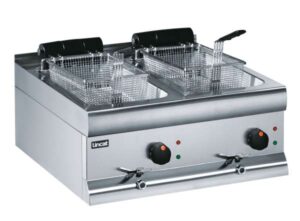
- Single vs twin tank – Single tank fryers suit operations running one product line – chips and fish in the same oil, for example. Twin tank fryers let you run two different oils simultaneously – chips in one, battered fish or chicken in the other – preventing flavour transfer and giving you flexibility across the menu.
- Gas vs electric – Gas fryers recover heat faster after a cold basket drop and suit high-volume chip shops and takeaways already on gas. Electric fryers offer more precise temperature control, easier installation and suit kitchens without a gas supply. Any gas fryer must be installed by a Gas Safe registered engineer.
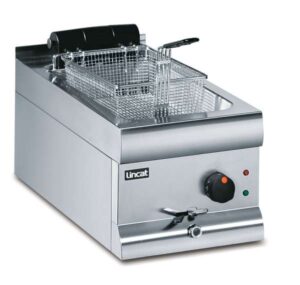
- Tank capacity – An 8L tank handles a small café or pub kitchen running moderate covers. A 23L single tank suits a busy chip shop or high-volume takeaway. Twin 8L tanks give flexibility without the footprint of a large single tank. Size to your peak service hour, not your average.
- Pressure fryers – Henny Penny pressure fryers cook under sealed pressure, reducing cook times and oil absorption significantly. The standard for high-volume fried chicken operations. Higher capital cost, but lower oil consumption and faster throughput per hour than open fryers.
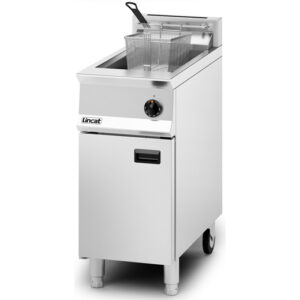
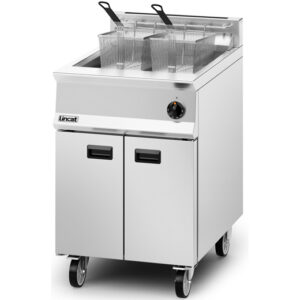
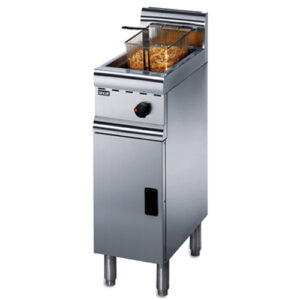
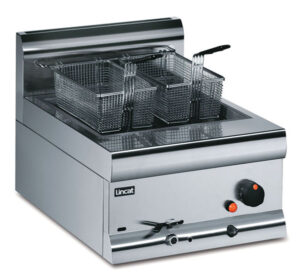
- Countertop vs freestanding – Countertop fryers suit smaller operations or supplementary capacity. Freestanding models (Buffalo 600 Series freestanding) suit permanent kitchen layouts running continuous service and need adequate floor drainage and ventilation.
Trade Insight
Temperature recovery is the spec that decides output quality. A fryer’s headline power rating doesn’t tell you much on its own. What matters is how fast the oil gets back to set temperature after cold food goes in. Cheap units drop 30–40°C on a big basket drop and crawl back up over several minutes – in that window, food absorbs oil instead of crisping. If you’re running steady covers through a lunch or dinner rush, recovery time is the single most important spec to check.
Oil maintenance is the part most operations skip – and it costs them. Filtered oil lasts significantly longer than unfiltered oil. A fryer running unfiltered oil degrades faster, produces darker, bitter-tasting food and needs full oil changes more frequently. Filter daily on high-use fryers, top up to the fill line after filtering, and do a full oil change when the oil darkens or starts smoking at operating temperature.
Twin tank fryers pay for themselves on a varied menu. Running chips and battered fish in the same oil transfers flavour and degrades both products. A twin tank fryer keeps oils separate – chips in one, proteins in the other. The capital cost difference between a single and twin tank unit is recovered quickly in oil savings and product quality consistency.
Pressure fryers are a different category, not just a premium fryer. Henny Penny pressure fryers cook under sealed pressure – cook times are shorter, oil absorption is lower and throughput per hour is significantly higher than an open fryer of the same tank size. They’re the industry standard for high-volume fried chicken operations. The trade-off is higher capital cost and more involved maintenance. For a chip shop or pub kitchen, an open fryer is the right tool. For a fried chicken operation running 200+ covers per service, pressure is worth specifying.
Why Buy from Ascot Wholesale
- Competitive trade pricing – across the full commercial fryer range.
- Trusted brands – Buffalo, Henny Penny and Rational, used daily in real UK catering operations.
- Gas and electric models – single and twin tank, countertop and freestanding, open and pressure fryers.
- Free delivery on qualifying orders – across the UK mainland.
- Trade accounts for regular buyers – chip shops, restaurants and contract caterers placing ongoing orders.
- 25 years supplying UK hospitality – trade authority built on real commercial experience across chip shops, restaurants and high-volume takeaway operations.
Browse our full Cooking Equipment range, or explore related categories: Chip Scuttles and Chargrills.
Frequently Asked Questions
What’s the difference between single and twin tank commercial fryers?
A single tank fryer runs one oil for all products – suited to operations cooking one product line. A twin tank fryer runs two separate oils simultaneously, preventing flavour transfer between products. For kitchens running chips alongside battered fish, chicken or other proteins, a twin tank fryer is the practical choice.
Should I buy a gas or electric commercial fryer?
Gas fryers recover heat faster after a cold basket drop and suit high-volume chip shops and takeaways already on gas. Electric fryers offer more precise temperature control and easier installation. Any gas fryer must be installed by a Gas Safe registered engineer. For most UK pub kitchens and restaurants, electric is the practical starting point unless you’re already on gas.
How often should I filter fryer oil?
Filter daily on high-use fryers – every service if you’re running continuous covers. Unfiltered oil degrades faster, produces darker food and needs full changes more frequently. Top up to the fill line after filtering. Do a full oil change when the oil darkens noticeably, starts smoking at operating temperature, or produces off flavours.
What size commercial fryer do I need?
An 8L tank handles a small café or pub kitchen running moderate covers. A 23L single tank suits a busy chip shop or high-volume takeaway. Twin 8L tanks give flexibility across two product lines without the footprint of a large single tank. Size to your peak service hour – a fryer running at capacity every service recovers slowly and produces inconsistent results.
What is a pressure fryer and when do I need one?
A pressure fryer cooks under sealed pressure, reducing cook times and oil absorption versus an open fryer. Henny Penny pressure fryers are the industry standard for high-volume fried chicken operations – faster throughput, lower oil consumption, more consistent results. For chip shops and pub kitchens, an open fryer is the right tool. For fried chicken operations running 200+ covers per service, pressure is worth specifying.
Do commercial fryers need dedicated ventilation?
Yes. Commercial fryers produce cooking fumes and grease vapour that require adequate extraction. Check your extraction canopy coverage before positioning a fryer – gas fryers additionally require adequate ventilation for combustion gases. Any gas fryer must be installed by a Gas Safe registered engineer under the Gas Safety (Installation and Use) Regulations 1998.