

Up to 40% off
Glassware
Shop
Bar Accessories

Get 30% off
Tableware
Shop
Refrigeration

Save Up To 30%
Front of House

Shop
Kitchen Accessories

Shop
Catering Equipment
Shop
Cleaning

Get 30% off
Disposables
Category
- Catering Equipment Wholesale (12)
- Commercial Cooking Equipment (12)
- Toasters (12)
- Commercial Cooking Equipment (12)
Brand
- Uropa (1)
- Lincat (3)
- Buffalo (1)
- Dualit (12)
- Hallco (1)
Collection
- Classic (3)
- Lite (3)
Colour
- Silver (2)
Material
- Stainless Steel (8)
Product Type
- Toaster (3)
- Toasters (14)
Warranty
- 1 Year (1)
- 2 Years (3)
Price
Min: £
Max: £
Toasters
Showing 17–17 of 17 results
Showing 17–17 of 17 results
Commercial Toasters for Professional Kitchens
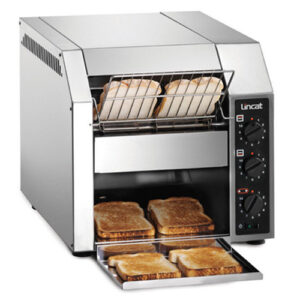
Commercial toasters are built for the breakfast rush – not the occasional slice. Pop-up models handle up to 50 covers a morning in a café or small hotel. Conveyor toasters handle volume: bread feeds through on a belt, browning is consistent, and output is continuous through a long service. Get the type wrong and you’re either over-specced for your operation or creating a bottleneck at the pass every morning.
Ascot Wholesale stocks commercial toasters from Dualit, Buffalo, Lincat and Hallco – pop-up models from 4 to 8 slice capacity, conveyor models for high-volume operations, and combi units for kitchens running both toast and toasted sandwiches. Trade pricing, reliable stock, UK delivery.
How to Choose a Commercial Toaster
- Pop-up vs conveyor – Pop-up toasters suit operations running up to 100 covers per breakfast service. Conveyor toasters are for continuous high-volume output – bread feeds through on a belt, browning is set by belt speed, and there’s no wait between batches. If your breakfast service runs more than 100 covers, a conveyor is the right tool.
- Slice capacity – A 4-slice pop-up handles around 60–80 slices per hour. A 6-slice model gives around 90–120 slices per hour. An 8-slice commercial toaster handles 120–160 slices per hour – the right spec for a busy hotel breakfast or large café. Size to your peak cover count, not your average.
- Browning control – Commercial pop-up toasters should offer at least 5 browning settings. Conveyor toasters control browning via belt speed – slower belt = darker toast. Check the range of adjustment on the spec sheet before ordering.
- Slot width – Standard slots handle regular sliced bread. Wide-slot models (Dualit Catering Pop Up) handle thick-cut bread, bagels and artisan loaves. If your menu runs anything thicker than standard sliced, wide slots are non-negotiable.
- Dualit vs budget brands – Dualit commercial toasters are built to be serviced – elements, springs and timers are all replaceable. Budget brands are cheaper upfront but not repairable. For a hotel or restaurant running breakfast 365 days a year, Dualit’s serviceability is a real operational advantage.
Trade Insight
The 8-slice commercial toaster is the most practical spec for a hotel breakfast operation. A standard hotel running 80–120 breakfast covers needs continuous output from 7am to 10am. A 4-slice pop-up creates a bottleneck – guests wait, service stalls. An 8-slice model or a conveyor toaster removes that bottleneck and keeps the pass moving.
Conveyor toasters need belt speed calibration before service. Set the belt speed too fast and toast comes out pale. Too slow and it burns. Calibrate on your actual bread type before the first service – thick-cut and thin-cut bread need different settings. Once set, output is consistent and hands-free.
Dualit’s serviceability is its real commercial advantage. Elements, springs and ejection mechanisms are all user-replaceable on Dualit commercial models. A Dualit toaster that breaks down mid-service can often be back running within minutes. A budget toaster that fails mid-breakfast service gets binned and replaced – at full cost.
Slot width is the detail that gets overlooked. Standard slots handle regular sliced bread. If your menu runs thick-cut bread, sourdough, bagels or brioche buns, you need wide slots. Trying to force thick bread into standard slots damages the element guides and shortens the unit’s life significantly.
Why Buy from Ascot Wholesale
- Competitive trade pricing – across the full commercial toaster range.
- Trusted brands – Dualit, Buffalo, Lincat and Hallco, used daily in UK hotels, restaurants and cafés.
- Pop-up and conveyor models – 4, 6 and 8 slice capacity, plus combi toastie and waffle units.
- Free delivery on qualifying orders – across the UK mainland.
- Trade accounts for regular buyers – hotels, restaurants and contract caterers placing ongoing orders.
- 25 years supplying UK hospitality – trade authority built on real commercial experience across hotels, restaurants and café operations.
Browse our full Cooking Equipment range, or explore related categories: Sandwich Grills and Contact Grills.
Frequently Asked Questions
What is the difference between a pop-up and a conveyor commercial toaster?
A pop-up toaster heats bread in fixed slots and ejects it when done – suited to operations running up to 100 covers per breakfast service. A conveyor toaster moves bread through a heated chamber on a belt, giving continuous output with no wait between batches. Conveyor toasters are the right choice for high-volume hotel breakfast and large café operations.
What does a commercial toaster 8 slice model offer over a 4-slot unit?
An 8-slice commercial toaster roughly doubles the output of a 4-slot unit – around 120–160 slices per hour versus 60–80. For a hotel or restaurant running 80–120 breakfast covers, the 8-slice model removes the bottleneck that a 4-slot creates at peak service.
Are Dualit commercial toasters worth the price?
Yes, for operations running breakfast 365 days a year. Dualit commercial toasters are built to be serviced – elements, springs and ejection mechanisms are all user-replaceable. A Dualit that breaks mid-service can often be repaired on the spot. Budget toasters that fail get replaced at full cost. Over a 3–5 year lifespan, Dualit’s serviceability makes it the lower-cost option for high-frequency operations.
What are heavy duty toasters and when do I need one?
Heavy duty commercial toasters are built for continuous daily use across a full breakfast service – reinforced elements, wider slots, higher cycle ratings. You need one when your operation runs more than 50 covers per morning, or when you’re toasting thick-cut bread, bagels or artisan loaves that standard commercial models struggle with.
How do I stop a commercial toaster from producing burnt edges and pale centres?
Burnt edges and pale centres are a browning calibration problem on conveyor toasters, or a slot-width mismatch on pop-up models. On a conveyor, adjust the belt speed and check that the heating elements are clean and even. On a pop-up, check that the bread fits the slot properly – oversized bread touching the element guides causes uneven browning.
Can I get a commercial toaster that also makes toasted sandwiches?
Yes – Dualit’s Combi range (2+1 and 2+2 models) combines standard toast slots with a sandwich cage, letting you run both from a single unit. The Dualit 2-in-1 Toastie and Waffle Maker adds waffle capability. Combi units suit cafés and smaller hotel operations where counter space is limited.