

Up to 40% off
Glassware
Shop
Bar Accessories
Get 30% off
Tableware
Shop
Refrigeration

Save Up To 30%
Front of House
Shop
Kitchen Accessories
Shop
Catering Equipment
Shop
Cleaning
Get 30% off
Disposables
Category
- Catering Equipment Wholesale (32)
- Commercial Food Preparation Equipment (32)
- Meat Slicers (32)
- Commercial Food Preparation Equipment (32)
Brand
- Uropa (13)
- Buffalo (13)
- Metcalfe (19)
Product Type
- Cutters & Slicers (31)
- Meat Slicers (1)
Warranty
- 1 Year (2)
- 2 Years (16)
Price
Min: £
Max: £
Meat Slicers
Showing 17–32 of 32 results
-
£1,830.50 Ex. VAT
-
£1,997.10 Ex. VAT
-
£2,991.80 Ex. VAT
-
£948.50 Ex. VAT
-
£1,660.40 Ex. VAT
-
£1,893.50 Ex. VAT
-
£1,975.40 Ex. VAT
-
£696.50 Ex. VAT
-
£715.40 Ex. VAT
-
£1,096.90 Ex. VAT
-
£1,038.80 Ex. VAT
-
£1,373.40 Ex. VAT
-
£2,496.90 Ex. VAT
-
£591.50 Ex. VAT
-
£652.40 Ex. VAT
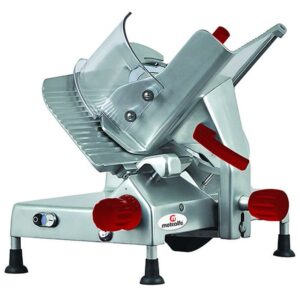
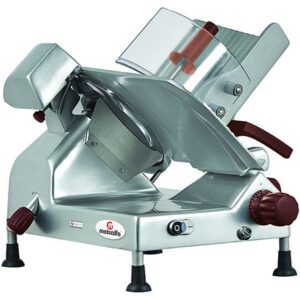


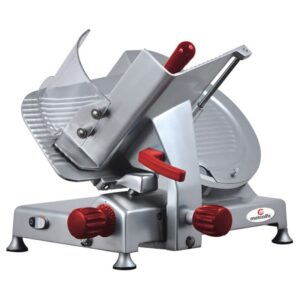
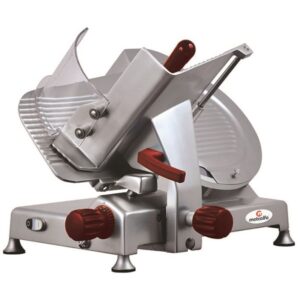
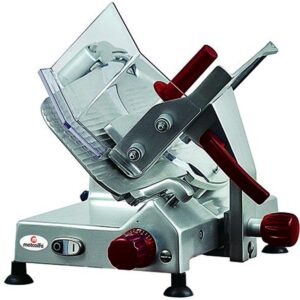

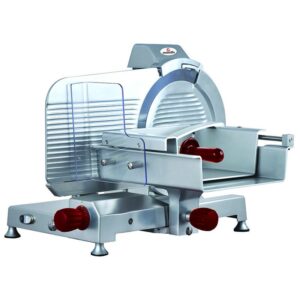
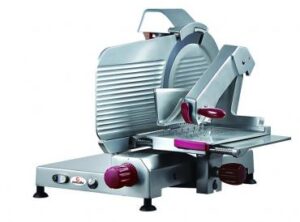
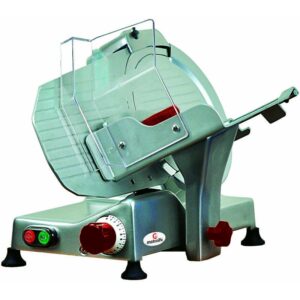

Showing 17–32 of 32 results
Commercial Meat Slicers for Delis, Butchers and Catering Kitchens
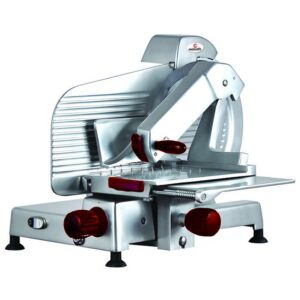
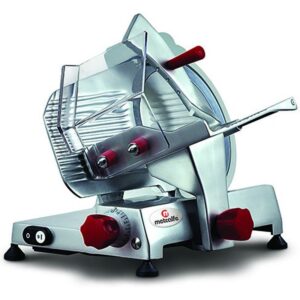
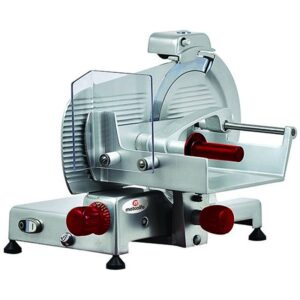
A commercial meat slicer delivers clean, consistent portions of cooked and cured meats, cheese and charcuterie at the speed and volume a professional kitchen or deli counter demands – without blade drag, product crush or inconsistent thickness across a service. Manual meat slicers suit lower-volume operations where an operator controls each cut – delis, small restaurants and prep kitchens running moderate daily throughput. Automatic meat slicers drive the carriage mechanically, freeing the operator and maintaining consistent slice thickness across high-volume runs – the standard for busy deli counters, butchers and catering production kitchens.
Ascot Wholesale stocks commercial meat slicers from Buffalo and Metcalfe – Buffalo manual slicers in 220mm, 250mm and 300mm blade sizes for entry to mid-range use, and Metcalfe automatic slicers in 300mm and 350mm blade sizes for high-volume professional operations. Trade pricing, reliable stock, UK delivery.
How to Choose a Commercial Meat Slicer
Manual vs automatic – A manual meat slicer requires the operator to push the carriage by hand for each cut – suited to lower-volume operations where throughput is moderate and operator attention is available. An automatic slicer drives the carriage mechanically, allowing continuous slicing without operator input – suited to high-volume deli counters, butchers and catering production kitchens where speed and consistency across large runs matter.
Blade size – Blade diameter determines the maximum product size the slicer can handle. A 220mm blade suits small portions and light-duty use. A 250mm blade handles standard deli and restaurant portions. A 300mm blade (Buffalo 300mm, Metcalfe automatic 300mm) handles larger joints and high-volume throughput. A 350mm blade (Metcalfe automatic 350mm) suits the highest-volume butchery and production operations.
Motor power – A weak motor strains on dense products – whole hams, large joints, hard cheese – and overheats under sustained use. Match motor power to your heaviest regular product and your peak daily throughput. Metcalfe automatic slicers are built for sustained high-volume use; Buffalo manual slicers suit moderate daily throughput.
Slice thickness adjustment – Precise, repeatable thickness adjustment is essential for consistent portioning. Check the adjustment range and the precision of the thickness control – a slicer that drifts between cuts produces inconsistent portions and increases waste.
Ease of cleaning – A meat slicer that is difficult to disassemble will not be cleaned to the standard UK food safety regulations require. Look for removable blade guards, smooth surfaces and tool-free disassembly. Clean the blade and carriage after every use – dried meat residue on the blade dulls the edge and creates a food safety risk.
Trade Insight
Blade sharpness is the single most important maintenance factor on any meat slicer. A sharp blade slices cleanly without heating the product – heat from a dull blade changes the texture and flavour of cured meats and affects slice quality. Sharpen the blade at the manufacturer’s recommended interval and inspect it before every service. A slicer running a dull blade costs more in product waste and quality complaints than the cost of regular sharpening.
Metcalfe automatic slicers are the professional standard for high-volume deli and butchery operations. The Metcalfe 300mm and 350mm automatic models are built for sustained continuous use – consistent slice thickness across a full day’s production, robust construction, and UK spare parts availability. At £3,716–£4,816 ex. VAT they represent a significant investment; for an operation running high daily throughput, the consistency and speed gains recover the cost quickly.
Buffalo manual slicers cover entry to mid-range requirements. The 220mm model suits light-duty prep and occasional slicing. The 250mm and 300mm models handle standard restaurant and deli throughput. All Buffalo slicers are built to commercial specification – not domestic rebrands – and carry UK warranty support.
Clean the slicer while the residue is still soft. Dried meat and fat on the blade and carriage is harder to remove and increases the risk of cross-contamination. Clean immediately after use: remove the blade guard, wipe the blade with a food-safe sanitiser, clean the carriage and product table, and reassemble. A slicer cleaned correctly after every use maintains blade sharpness and meets UK food hygiene requirements.
Why Buy from Ascot Wholesale
- Competitive trade pricing – across the full Buffalo and Metcalfe commercial meat slicer range.
- Manual and automatic models – from Buffalo 220mm entry-level to Metcalfe 350mm automatic for high-volume butchery and deli operations.
- Trusted brands – Buffalo and Metcalfe, used daily in real UK deli, butchery and catering operations.
- Free delivery on qualifying orders – across the UK mainland.
- Trade accounts for regular buyers – delis, butchers, restaurants and contract caterers placing ongoing orders.
- 25 years supplying UK hospitality – trade authority built on real commercial experience across restaurants, hotel kitchens and production operations.
Browse our full Food Preparation Equipment range, or explore related categories: Vacuum Pack Machines and Food Processors.
Frequently Asked Questions
What is the difference between a manual and automatic meat slicer?
A manual meat slicer requires the operator to push the carriage by hand for each cut – suited to lower-volume operations where throughput is moderate. An automatic slicer drives the carriage mechanically, allowing continuous slicing without operator input – suited to high-volume deli counters, butchers and catering production kitchens. For operations running large daily volumes of sliced product, an automatic slicer delivers consistent results with less operator fatigue.
What blade size do I need for a commercial meat slicer?
Match the blade size to your largest regular product. A 220mm blade suits light-duty and occasional use. A 250mm blade handles standard deli and restaurant portions. A 300mm blade handles larger joints and high-volume throughput. A 350mm blade suits the highest-volume butchery and production operations. Check the maximum product diameter against your blade size before ordering.
Can a meat slicer cut cheese and charcuterie as well as meat?
Yes. Commercial meat slicers handle cooked and cured meats, hard and semi-hard cheeses, and charcuterie. Soft cheeses and very fatty products can stick to the blade – use a PTFE-coated blade or chill the product before slicing for cleaner results. Always clean the blade thoroughly between different product types to prevent cross-contamination.
How do I keep a meat slicer blade sharp?
Sharpen the blade at the manufacturer’s recommended interval using the integrated sharpener (where fitted) or a professional blade sharpening service. Inspect the blade before every service – a blade that drags rather than slices cleanly needs sharpening. Never run a dull blade: it heats the product, produces inconsistent slices and increases waste.
What are the food safety requirements for using a meat slicer in a commercial kitchen?
A commercial meat slicer must be cleaned and sanitised after every use under UK food hygiene regulations. This includes removing the blade guard, cleaning the blade with a food-safe sanitiser, cleaning the carriage and product table, and reassembling correctly. Cross-contamination between raw and cooked products must be prevented – dedicate separate slicers to raw and cooked products where possible, or clean and sanitise thoroughly between uses.
What is the difference between the Metcalfe 300mm and 350mm automatic slicers?
The Metcalfe 350mm automatic slicer handles larger product diameters and higher-volume throughput than the 300mm model – suited to the highest-volume butchery and production operations. The 300mm model suits high-volume deli counters and catering kitchens running standard joint and portion sizes. Both are automatic slicers built to the same professional specification – the 350mm is the higher-capacity model for the most demanding operations.