
Up to 40% off
Glassware
Shop
Bar Accessories
Get 30% off
Tableware
Shop
Refrigeration

Save Up To 30%
Front of House
Shop
Kitchen Accessories

Shop
Catering Equipment
Shop
Cleaning
Get 30% off
Disposables
Category
- Front of House (1)
- Buffet & Food Display (1)
- Catering Equipment Wholesale (19)
- Commercial Cooking Equipment (19)
- Contact Grills (19)
- Sandwich Grills (1)
- Commercial Cooking Equipment (19)
Brand
- Uropa (10)
- Lincat (2)
- Rollergrill (1)
- Buffalo (10)
- Dualit (2)
- Falcon (2)
- Roband (2)
- Hallco (1)
Case Quantity
- 5 (1)
Colour
- Black (2)
- Silver (8)
Material
- Stainless Steel (8)
Product Type
- Accessories (2)
- Barbecues (2)
- Grills (5)
Warranty
- 2 Years (2)
Price
Min: £
Max: £
Contact Grills
Showing 17–20 of 20 results
-
£479.99 Ex. VAT
-
£470.25 Ex. VAT
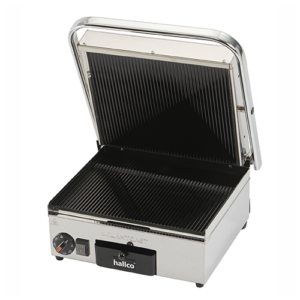
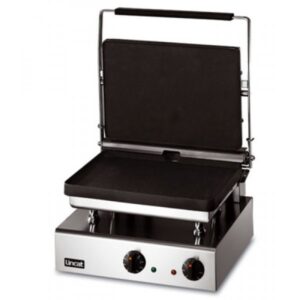
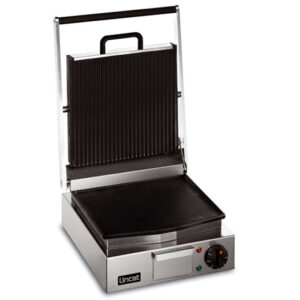
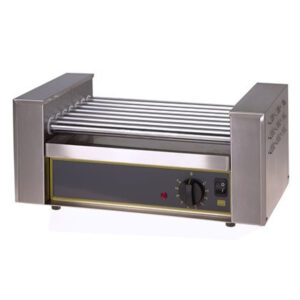
Showing 17–20 of 20 results
Commercial Contact Grills for Professional Kitchens
A commercial contact grill – also called a panini press or panini grill – cooks food from both sides at once, cutting cook times by up to 50% compared to open grilling. No flipping, no guesswork, consistent results every time. Every unit in this range runs on a standard single-phase supply, sits on the countertop, and is ready to cook within minutes of switching on. No gas connection. No extraction hood required in most setups. Contact grills are as close to plug-and-go as commercial cooking equipment gets.
Ascot Wholesale stocks commercial contact grills from Buffalo, Dualit, Falcon and Hallco – single and double plate models, flat, ribbed and mixed plates, for cafés, delis, sandwich bars, fast-casual restaurants and contract catering operations. Trade pricing, reliable stock, UK delivery.
How to Choose a Commercial Contact Grill
- Flat vs ribbed plates – Flat plates give maximum surface contact – the right choice for toasted sandwiches, paninis, burgers and chicken fillets where even browning and thorough cooking matter. Ribbed plates add char marks and suit steaks, vegetables and items where presentation and char flavour are part of the product.
- Mixed plate models – Buffalo’s ribbed top / flat bottom configuration gives you char marks on the presentation side and even cooking on the base – a practical compromise for operations running both paninis and grilled proteins on the same unit.
- Single vs double – A single contact grill handles one sandwich or two chicken fillets at a time – suited to a small café or supplementary capacity. A double contact grill runs two independent cooking zones simultaneously, doubling throughput without doubling footprint. For any operation running more than 30 covers per service, a double is the right spec.
- Floating hinge – A floating hinge lets the top plate adjust automatically to the thickness of the food – thick ciabattas, stuffed paninis and chicken breasts all cook evenly without manual adjustment. Fixed hinge models suit operations running a consistent, uniform product.
- Wattage – Higher wattage means faster heat-up and faster recovery between loads. Check the wattage on the spec sheet – budget single models run around 1.8kW; heavy-duty double models (Dualit Double Contact Grill) run 3.6kW+. For a busy lunch service, recovery speed matters as much as plate size.
Trade Insight
Plate choice defines the product, not just the presentation. Flat plates maximise surface contact – every part of the food touches the plate, cooking evenly from both sides. Ribbed plates reduce surface contact, creating char marks but leaving gaps in heat transfer. For a toasted sandwich or panini, flat plates produce a better result. For a grilled chicken breast where char marks are part of the product, ribbed plates are correct. Don’t default to ribbed because it looks more professional – match the plate to the food.
A floating hinge is non-negotiable for a varied menu. Fixed hinge grills apply the same pressure regardless of food thickness – a thick ciabatta gets crushed, a thin flatbread barely makes contact. A floating hinge adjusts automatically, applying even pressure across the full surface regardless of thickness. For any café or deli running a varied sandwich and protein menu, floating hinge is the spec to insist on.
Double contact grills pay for themselves on throughput alone. A single contact grill running a busy lunch service creates a queue – one panini at a time, 3–4 minutes per cycle. A double contact grill runs two zones simultaneously, halving wait time without adding counter footprint. The capital cost difference between a single and double Buffalo Bistro unit is recovered in the first busy week of service.
Recovery time between loads is the spec most buyers ignore. A contact grill that takes 3 minutes to recover between loads after a cold chicken breast creates a gap in service. Check the wattage – a 3.6kW double grill recovers faster than a 1.8kW single. On a busy lunch pass, recovery time is the difference between a smooth service and a queue.
Why Buy from Ascot Wholesale
- Competitive trade pricing – across the full commercial contact grill and panini press range.
- Trusted brands – Buffalo, Dualit, Falcon and Hallco, used daily in real UK café and restaurant operations.
- Flat, ribbed and mixed plate models – single and double, with floating hinge options for varied menus.
- Free delivery on qualifying orders – across the UK mainland.
- Trade accounts for regular buyers – cafés, delis and contract caterers placing ongoing orders.
- 25 years supplying UK hospitality – trade authority built on real commercial experience across cafés, sandwich bars and fast-casual restaurant operations.
Browse our full Cooking Equipment range, or explore related categories: Chargrills and Sandwich Grills.
Frequently Asked Questions
What is a commercial contact grill?
A commercial contact grill cooks food from both sides simultaneously using heated upper and lower plates. Also called a panini press or panini grill, it cuts cook times by up to 50% compared to open grilling, requires no gas connection and runs on a standard single-phase supply. Used in cafés, delis, sandwich bars and fast-casual restaurants.
What’s the difference between a contact grill and a panini press?
Contact grill and panini press refer to the same type of equipment – a countertop unit with heated upper and lower plates that cook food from both sides simultaneously. The terms are used interchangeably. “Panini press” is common in café and deli settings; “contact grill” is the broader commercial term covering all plate types and sizes.
Should I choose flat or ribbed plates?
Flat plates suit toasted sandwiches, paninis, burgers and chicken fillets – maximum surface contact, even browning, thorough cooking. Ribbed plates suit steaks, vegetables and items where char marks are part of the product. Mixed plate models (ribbed top, flat bottom) offer a practical compromise for operations running both.
What does a floating hinge do on a contact grill?
A floating hinge lets the top plate adjust automatically to the thickness of the food, applying even pressure regardless of whether you’re cooking a thin flatbread or a thick stuffed ciabatta. Fixed hinge models apply the same pressure at a fixed height – a thick product gets crushed, a thin one barely makes contact. For a varied menu, a floating hinge is essential.
When do I need a double contact grill instead of a single?
When your operation runs more than 30 covers per lunch service, or when queue time at the grill is a problem. A double contact grill runs two independent cooking zones simultaneously – double the throughput on the same counter footprint. The capital cost difference between single and double is recovered quickly on any busy service.
Do commercial contact grills need PAT testing?
Yes – all portable electrical appliances used in a commercial setting should be PAT tested regularly. The frequency depends on the environment and usage level; HSE guidance recommends annual testing as a minimum for most catering equipment. Keep records of PAT test dates and results for compliance purposes.